Sarah, 52
Marketing director, took a sabbatical year
Sarah planned to spend five days in Lisbon. She stayed thirty-seven. When she came home, she had a story she couldn't stop telling — but no way to write it down. She wanted something her daughter could read in twenty years and understand what that trip had really been about.
1The Year I Said YesDeciding to take the sabbatical. Booking the ticket on a Tuesday afternoon. What she told herself it was about — and what it was actually about.
Deciding to take the sabbatical. Booking the ticket on a Tuesday afternoon. What she told herself it was about — and what it was actually about.
· · ·
I did not decide to change my life dramatically.
There was no breakdown, no slammed door, no cinematic escape. It happened on a Tuesday afternoon, in a glass conference room, while I listened to three people debate the wording of a campaign I had already stopped caring about.
Someone turned to me and asked what I thought.
I gave the right answer. Clear, calm, useful. The kind of answer that had built my career.
And that was what frightened me.
I realized I could still perform my life perfectly, even after I had stopped feeling present inside it.
That evening, at my kitchen table, I opened my laptop and searched for flights without knowing exactly what I was looking for. Lisbon appeared almost by accident. Five days. Not long enough to alarm anyone. Not ambitious enough to require an explanation.
I clicked "book" before I could turn it into a strategy.
At the time, I told myself I needed rest.
Only later would I understand that rest had never been the real reason. What I needed was to hear, beneath all the noise of being needed, the quieter voice of what I wanted.
· · ·
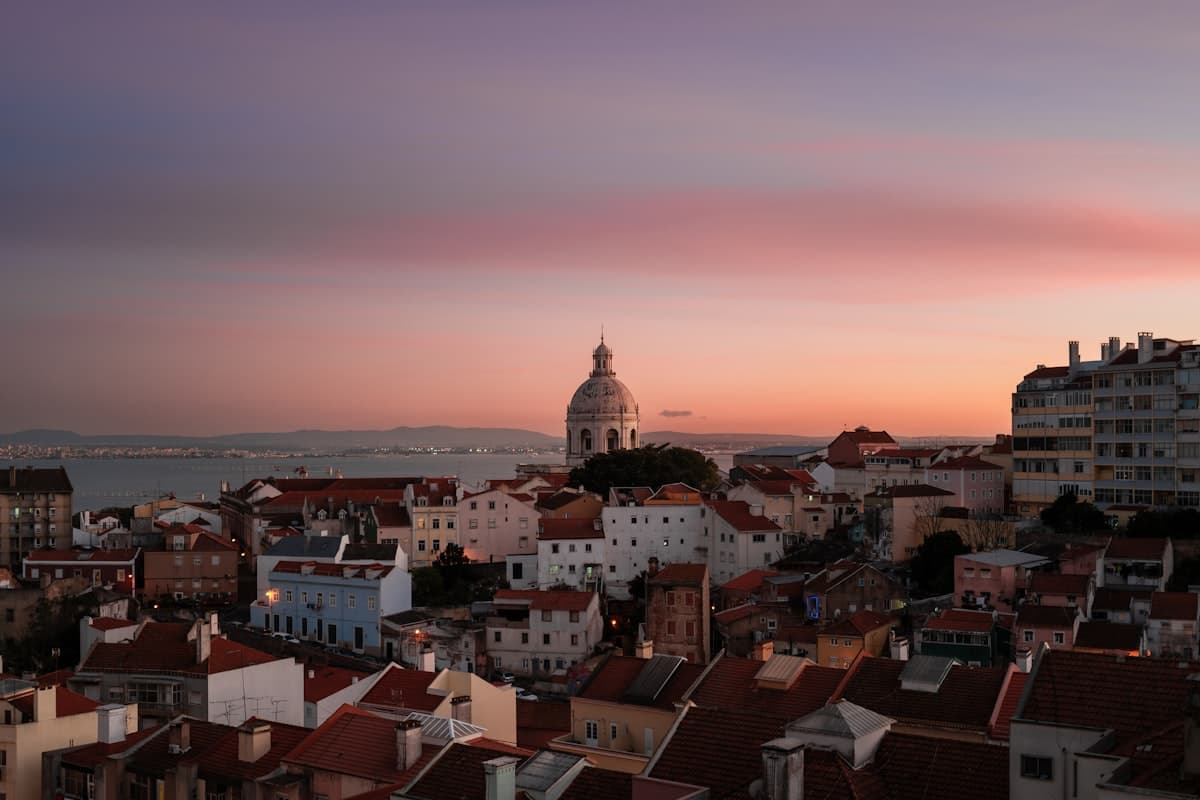
2Thirty-Seven Days in LisbonThe stay that stretched from five days to thirty-seven. The room above the fado bar. The man who sold oranges on the corner. The exact time the light hit the Tagus.
The stay that stretched from five days to thirty-seven. The room above the fado bar. The man who sold oranges on the corner. The exact time the light hit the Tagus.
· · ·
I was supposed to stay in Lisbon for five days.
That was the plan, although even calling it a plan makes it sound more deliberate than it was. I had booked a small room in Alfama, just above a fado bar, where every night the same low, aching voices rose through the floorboards long after I had turned off the light.
On the fifth morning, I opened my laptop to check in for my flight home.
Across the street, a woman was hanging laundry from a balcony. On the corner, the man who sold oranges was arranging them one by one into a perfect pyramid, as if the day itself depended on it. And beyond the rooftops, at exactly 7:42, the light reached the Tagus and turned the river silver.
I remember looking at the airline page and feeling no panic, no great revelation, no sudden act of courage.
Only a very simple thought:
Not yet.
So I changed the flight.
First by one week. Then another.
By the time I stopped postponing my return, five days had become thirty-seven.
I did not stay because Lisbon solved my life. It did not. I stayed because, for the first time in years, my days were not arranged around being useful to someone else.
No one needed an answer from me before breakfast. No one asked me to approve, decide, organize, reassure, or perform.
And slowly, in that small room above the music, I began to remember who I was when no one was asking me to be anything.
· · ·
3The Flight HomeThe last morning in Alfama. The taxi to the airport. What she understood at 35,000 feet that she hadn't been able to see on the ground.
The last morning in Alfama. The taxi to the airport. What she understood at 35,000 feet that she hadn't been able to see on the ground.
· · ·
On my last morning in Alfama, I woke before the alarm.
The fado bar below my room was silent for once. No voices through the floorboards, no glasses being cleared, no late footsteps on the stairs. Just the pale blue light of early morning and the sound of a suitcase being zipped closed.
I took one last coffee standing by the window. The man who sold oranges had not opened his stand yet. The street looked almost private, as if Lisbon had given me a few quiet minutes to leave without making a scene.
In the taxi to the airport, I watched the city slide past the window — the tiled façades, the steep streets, the river appearing and disappearing between buildings. I felt sad, but not in the way I had expected. I was not sad to leave Lisbon. I was sad to leave the version of myself I had found there.
It was only later, somewhere above the clouds, at 35,000 feet, that I understood what I had not been able to see on the ground.
I had thought freedom meant going away.
But perhaps freedom was also the ability to return differently.
To the same work, the same family, the same responsibilities — but no longer as someone who had to disappear inside them.
I had gone to Lisbon for five days because I needed rest.
I came home thirty-seven days later knowing I needed something much harder, and much more honest.
I needed a life that still had room for me inside it.
· · ·
~90 pages · 3.5 hours with Frank · "I thought it was a travel story. Frank helped me see it was a story about learning to stop."